From Static Pages to Layered Digital Experiences
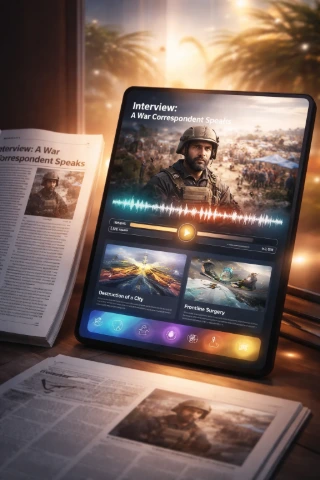
Embedded audio transformed what a printed interview could never quite achieve. A reader following a text transcript of, say, a war correspondent's account loses the tremor in the voice, the ambient sound of a crowded refugee camp. Digital editions began weaving in these audio layers around 2010, when tablet adoption accelerated and publishers like The New York Times experimented with multimedia long-form packages.
Animation proved equally revealing for subjects involving process or sequence. Explaining tectonic plate movement or a surgical procedure through static diagrams requires considerable imagination from the reader. Motion graphics remove that burden.
Interactive maps and timelines replaced flat illustrations in ways that genuinely changed information search behavior. Readers could zoom into a specific region, tap a date marker, and navigate their own path through the material rather than follow a fixed editorial sequence. Swiping and pinching introduced expectations that print could never satisfy.
When Interactivity Clarifies a Story – And When It Distracts
Animation earns its place when the subject resists static explanation. A graphic showing how a virus enters a cell, or how tectonic plates grind past each other over centuries, communicates something a diagram simply cannot. Non-linear documents extend this logic further, letting readers compare data sets, follow tangents, or revisit earlier sections without being locked into a single editorial path.
There's no denying, though, that interactivity can work against a story just as easily. Autoplay video mid-article, hover effects that trigger unexpectedly, or decorative transitions that serve no explanatory purpose all pull attention sideways. Research on multitasking and reading comprehension consistently shows that unnecessary motion increases cognitive load.
The honest editorial question is whether a given feature aids understanding or simply signals effort. Novelty is not a justification.
Publishers Must Balance Innovation, Revenue, and Access
Production costs alone explain much of the divide between multimedia-rich publishers and those who keep digital editions deliberately spare. A single interactive feature – an animated data visualization or an embedded audio documentary – can require designers, developers, and audio engineers working alongside editorial staff. Smaller publishers often can't justify that overhead, particularly when reader habits vary so widely across devices and age groups.
Advertising has pushed into interactive formats aggressively, with tappable product demos and expandable branded features appearing alongside editorial content. That proximity raises genuine questions. When a sponsored interactive element mirrors the style of a reported piece, readers may not immediately distinguish promotion from journalism.
Accessibility compounds every decision. Captions, transcripts, keyboard navigation, and screen-reader compatibility aren't optional refinements – they determine whether a publication reaches readers with visual, auditory, or motor differences. Motion-sensitive users face real discomfort from autoplay animations. Designing for one idealized reader, rather than the full range, is a failure publishers increasingly can't afford.
The Best Interactivity Serves the Story First
What separates effective digital publishing from mere technological novelty is editorial judgment. The shift from static pages to multimedia exploration has given publishers real tools for improving clarity and reader control, but those tools only work when chosen for the right reasons. Animation that explains a concept no diagram could, audio that places a reader inside a reported scene, a timeline that lets someone navigate history at their own pace – these add genuine value. Gratuitous interactivity, by contrast, fragments attention and undermines trust. Commercial pressures push toward spectacle; accessibility requirements push toward simplicity. The publishers who navigate this best treat every interactive element as a question rather than an answer, asking whether it genuinely aids understanding before it earns a place on the page.