Types of Digital Publications
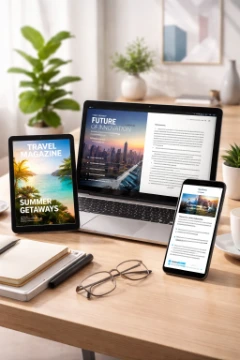
One of the aspects that contributes to the accessibility of digital publications is the sheer volume of different formats in which the content can be distributed. They can replicate the feeling of a physical book through ebooks, create page-turning magazines or catalogs, create scrollable periodicals with hyperlinks to allow the reader to continue researching, and even adapt these for mobile usage.
Whether short or long-form, packed with pictures or datasheets, these are easily replicable on digital formats and can be optimised for quick reading sessions or longer analysis.
Significance of PDFs as a Publishing Format
PDFs are reader friendly and also widely versatile across digital platforms, making them ideal for spreading content. Fonts, images, page layouts can all be fixed to remain in their positions, and then they can be replicated on smaller screens where applicable. No extra software is needed to download PDFs, and they can be shared, saved for later, or opened in reading mode. They are something of a bridge between hard copy and digitally-based content, and their easy readability makes a very low entry barrier for the reader.
Print Publications Adapted for Screens
Many digital publications began as printed magazines, newspapers, catalogues and periodicals. However, transferring a printed page directly onto a screen does not always provide the best reading experience. Instead, these need to be carefully analyzed, with the publisher looking into what information should be displayed, how it should be positioned on a screen for the user, and the feel of the reading experience.
A lot of the motifs found in physical content has been transferred over to digital publications, from magazine sleeves to the content layout in books, to replicate those same reading rhythms and buildups that the original physical designs aimed for.
Digital Enhancements to Content
But these have also been enhanced digitally. For publishers can integrate responsive interfaces, search functions, built-in videos, create hyperlinks, add jump links on the same page, and even recreate the page-turning dynamic of a physical book. These interactive features focus on breaking down barriers that physical content may have, such as not being able to jump to a specific chapter, highlight data in key text blocks, or jump from one source to another to verify certain facts.
Physical Copy Experience Digitally
The physical copy experience still persists, and behind the added practicality and interactive functionality of digital publications, many readers still feel more at home with something that, at least, has the same feel as a physical copy. Combining those elements with responsive designs can provide a better experience, taking the best of both worlds and giving the readership something that feels familiar but has the interactive tools to increase accessibility.
Endless Realm of Data and Content
One of the biggest advantages is the seemingly endless network of digital publications that a single page or book can use, and given an internet connection, the reader can be sent to virtually any related article, website or archive to continue. These are, of course, not really endless and there are obstacles that readers may face such as paywalls, geo-restricted content, or publications on non-compatible media. However, given the sheer volume and continuously expanding network of digital publications, there are nearly always new and more relevant sources, enhancing the quality and reliability of digital content.