From Digital Copies to Designed Learning Resources
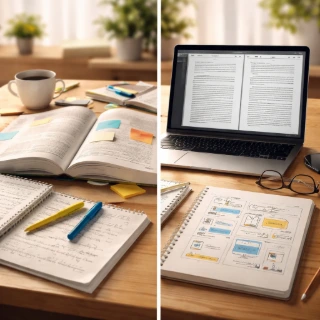
Early digital textbooks were essentially print editions saved as PDFs – the same content, the same page layouts, just displayed on a screen. Publishers assumed the format shift alone would modernize learning. It didn't. Scanning a 400-page PDF on a laptop replicates the limitations of print while adding new ones: poor navigation, eye strain, and no meaningful interaction with the material.
Placing conventional content on a screen without redesigning it tends to increase cognitive load rather than reduce it. Instructional design research has consistently found that learners benefit from chunked content, embedded self-checks, and adaptive pathways – none of which a static e-book provides.
There's also a meaningful distinction between digital textbooks, broader course materials, and interactive online courses. A digital textbook remains a reference resource. Course materials – readings, assessments, multimedia – serve a wider instructional function. Interactive courses are purpose-built learning experiences, with pedagogy embedded in the structure itself.
How Digital Materials Support Active Study and Inclusive Access
Study habits shift considerably when students can search a full textbook in seconds, highlight passages that sync across devices, and attach notes directly to the sentences that matter. These features reduce the friction of revision – no more flipping through dog-eared pages to find a half-remembered argument. Bookmarks and annotations become a personal revision map built alongside the reading itself.
Embedded quizzes and practice tasks push engagement further. When a publisher integrates formative questions directly after a chapter section, students receive immediate feedback rather than waiting for a graded assignment. That feedback loop is where passive reading starts to behave more like active study.
Accessibility gains are equally significant. Adjustable font sizes, high-contrast display modes, and screen-reader compatibility mean that a single digital edition can serve students with visual impairments, dyslexia, or processing differences without requiring separate adapted materials. Multimodal presentation – combining text, audio narration, and visual diagrams – addresses learning differences that a printed page simply cannot accommodate.
Digital Publishing Works Best When It Fits Real Teaching Contexts

Few teachers today rely on a single textbook, digital or otherwise. Most build their courses around combinations of licensed e-textbooks accessed through platforms like VitalSource or Leganto, supplementary journal articles, recorded lectures, and assignments distributed through learning management systems such as Canvas or Moodle. Managing these collections is genuinely complex. Universities must negotiate multi-user licenses, configure library access systems, and ensure materials remain available when a publisher updates or withdraws a title mid-semester.
Offline access cuts across all of this. Students studying in rural areas, commuting, or working in bandwidth-limited environments cannot always rely on a live connection. Publishers who restrict offline reading create real equity problems, not hypothetical ones.
Printed textbooks persist for good reason. Some subjects, particularly mathematics and music notation, remain difficult to navigate effectively on screen. Many students retain information better from print, and some simply prefer it.
The Future of Learning Is Hybrid, Not Paperless
Predictions of print's death have circulated since the first e-readers appeared, yet most schools and universities still order physical textbooks alongside digital subscriptions. What the past two decades have actually demonstrated is that format alone determines very little. Effective educational materials succeed because of how they are designed, how accessible they are to diverse learners, how well they integrate with teaching practice, and how reliably students can use them. A well-structured printed chapter and a thoughtfully built interactive module can each serve students well, depending on context. The strongest learning ecosystems treat these resources as complementary rather than competing, with educators making deliberate choices about when each format serves understanding best.